
1 Bigdata
BootcampBigdata2020-12-17
5 V
- volume
- velocity
- variety
data type
- structured data: csv, tsv, DB
- semi-structured data - 5-10%: logs, xml, json
- unstructured data: email, social media, sounds, vedio,images, word
Speed of data
- batch
- micro-batch
- real-time
Speed of data = from real time to batched processing
    File Storage: HDFS, ZFS

    No-SQL:
    - `Key-Value Store`: Redis, Aerospike
    - `In-memory`: Ignite
    - `Distributed DB`: Cassandra, HBase

    Tranditional DB: MySQL, Postgres

    Raw File Formats

    Typical access Pattern:

    - Use all the fields to validata, enhance, join data
    - Read through whole data set

    Formats:
    - Plain Text (unstructured)
    - Structured Text Data (Rows - CSV, TSV, JSON)
    - Binary files (images, videos)
    - Avro (Row oriented)

    Processed File Formats

    Typical access Pattern:
    - Use limited fields to aggregate data or run other analytical queries
    - Read filtered subset

    Formats:

    - Parquet (Columnar oriented)
    - ORC
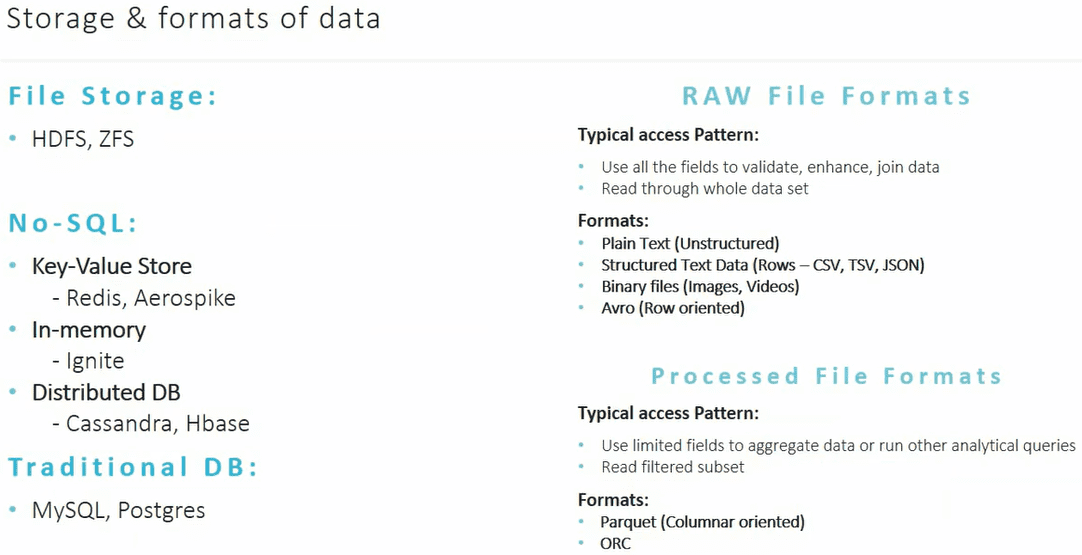
Storage & Formats of data
- Fow Format - OOTP, query faster
- Columnar format - OLAP, historical/archive data
Data compression
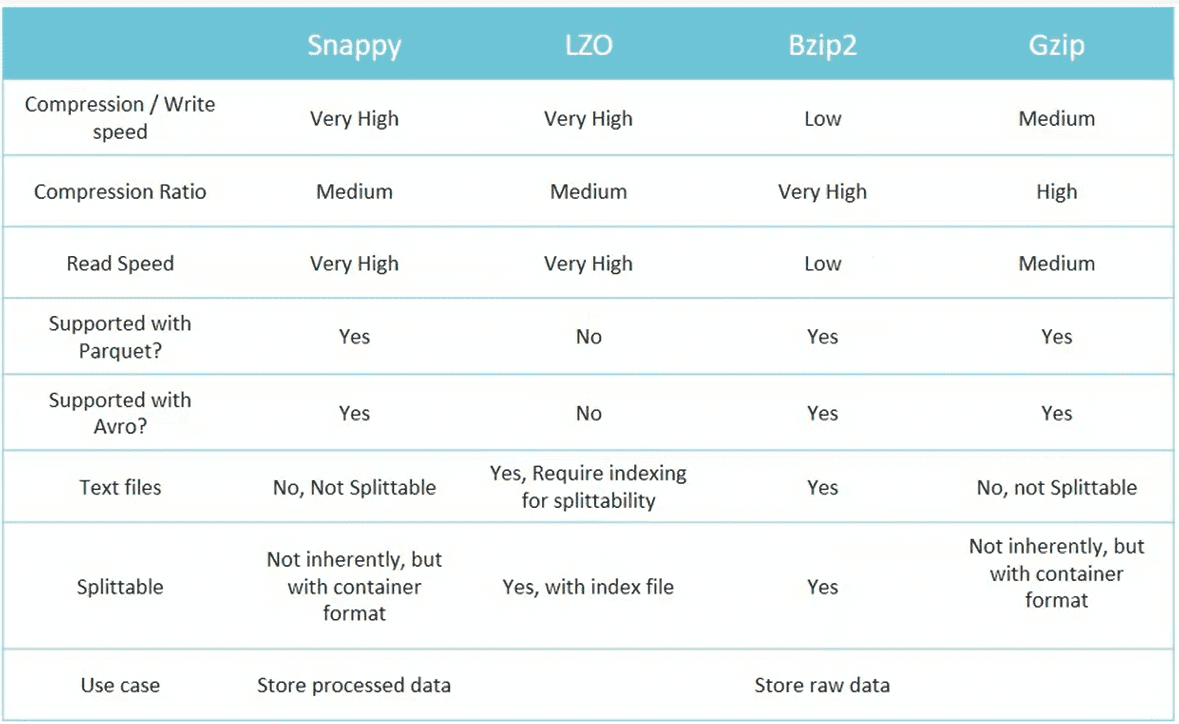
Ideal Big Data solution - main technical characteristics
- Be scalable
- Fault Tolerant
- Ensure highly availability
- Ensure data is widely accessible, but secure
- Support analytics, data science, and content applications
- Support workflow automation
- Integrate with legacy applications
- Be self-healing (自愈)
Functions
- Data Collection
- Data Storage
- Data Exploration
- Data Governance
- Data Product
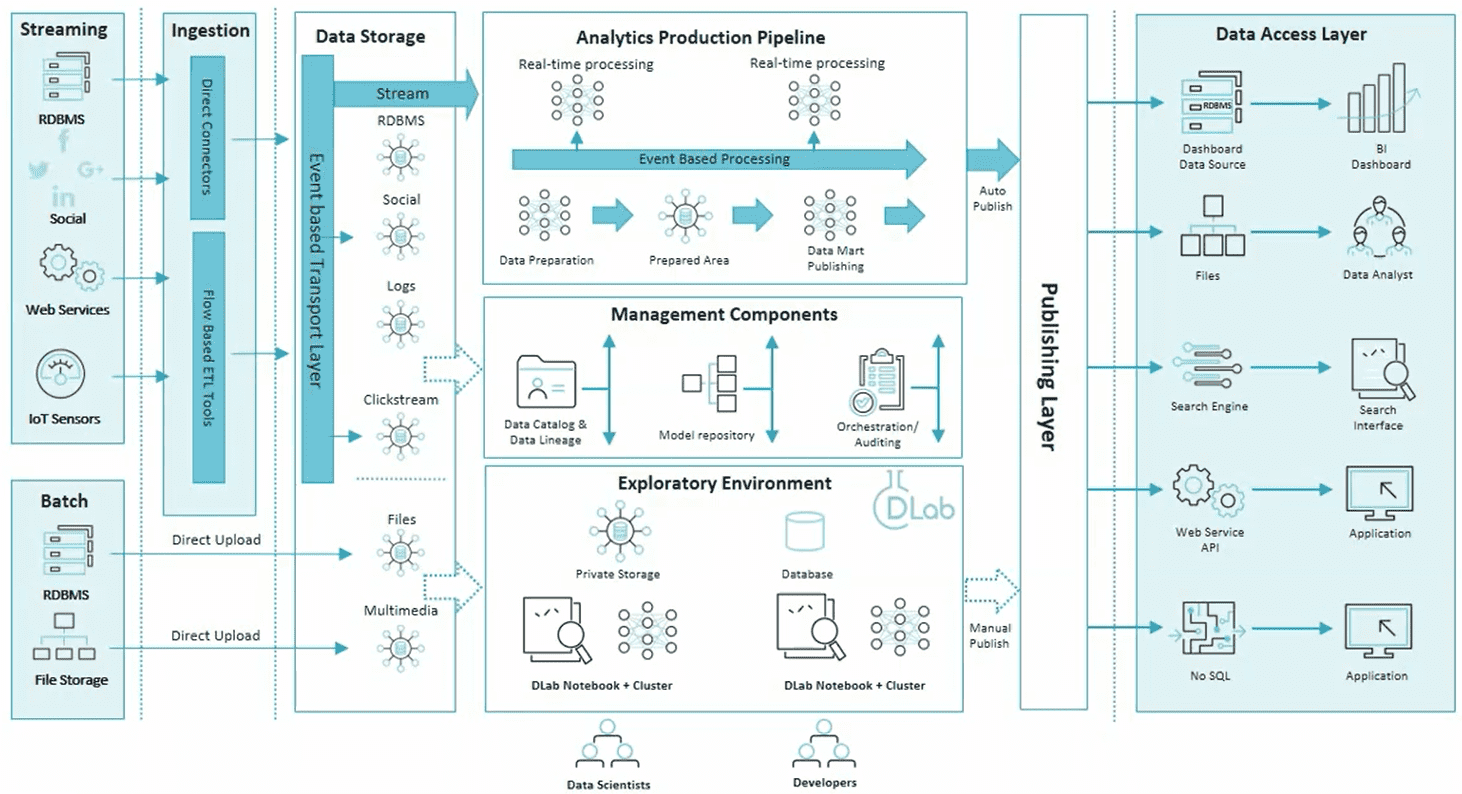
Blue Print
- ETL
- Streaming
- Batch
- Ingestion
- Exploratory Environment: development env using product data without impace product pipeline.
More
- Cloudera and Hortonworks are merged