
201 Kafka 4
BootcampBigdata2020-12-17
Kafka
Apache Kafka is a distributed streaming platform
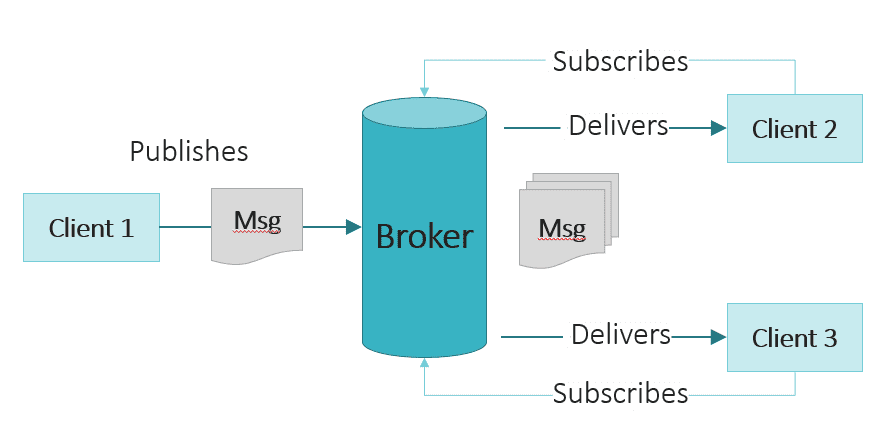
What is Kafka
- Apache Kafka is a fast, scalable, durable, and fault-tolerant publish-subscribe messaging system
- Kafka is often used in place of traditional message brokers like
JMSandAMQPbecause of its higher throughput, reliability and replication - Kafka may work in combination with Storm, Spark, Samza, Flink, etc. for real-time analysis and rendering of streaming data
- Whatever the industry or use case, Kafka brokers massive message streams for low-latency analysis in Enterprise Apache Hadoop
What does Kafka do?
Apache Kafka supports a wide range of use cases where high throughput, reliable delivery, and horizontal scalability are important. Apache Spark and Apache Cassandra work very well in combination with Kafka.
Typical use cases include:
- Messaging
- Stream processing: pipeline, transfer, aggregate, lightweight library
kafka stream, in place of Apache storm, Apache Samsome - Metrics collection & monitoring
- Website activity tracking: pageviews, searching, user activity capture to topic
- Event sourcing (CDC)
- Log aggregation
- Commit log (log replication)
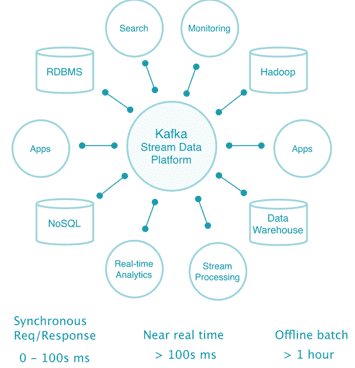
Qualities
- Scalability
- Durability (耐久力)
- Reliability
- Performance
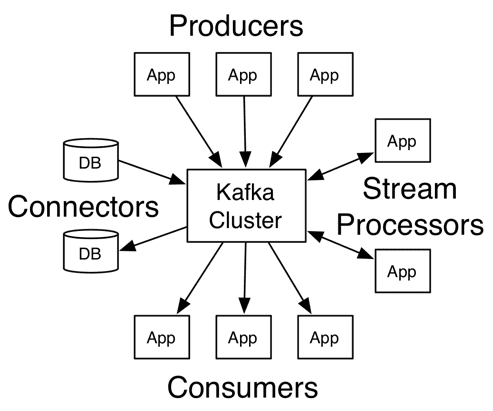
High-level overview
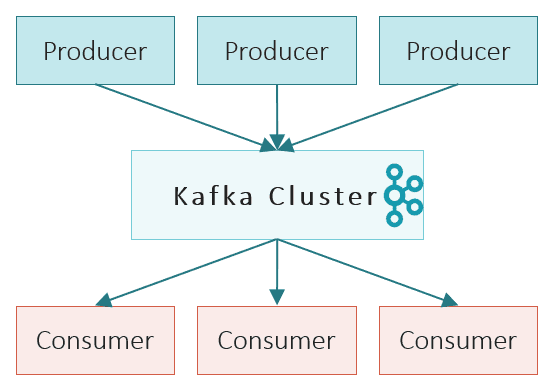
Kafka architecture
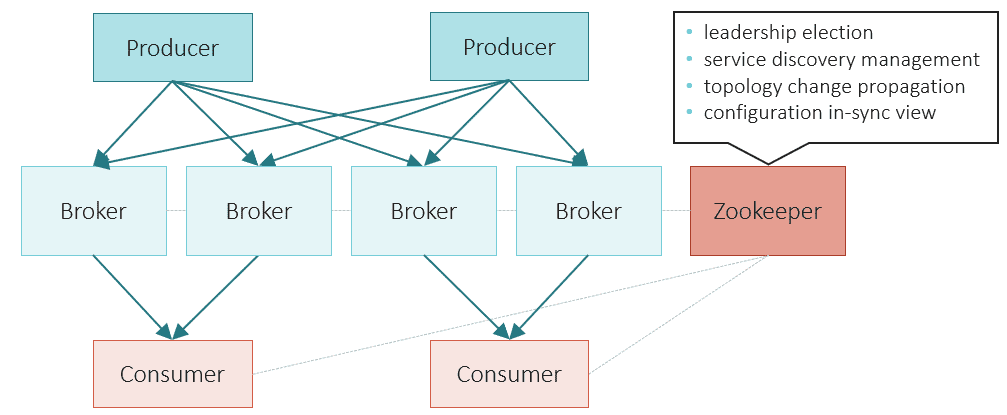
Core APIs
- The
Producer APIallows an application to publish a stream of records to one or more Kafka topics. - The
Consumer APIallows an application to subscribe to one or more topics and process the stream of records produced to them. - The
Connect APIallows building and running reusable producers or consumers that connect Kafka topics to existing applications or data systems. For example, a connector to a relational database might capture every change to a table. - The
Streams APIallows an application to act as a stream processor, consuming an input stream from one or more topics and producing an output stream to one or more output topics, transforming the input streams to output streams.
Topics
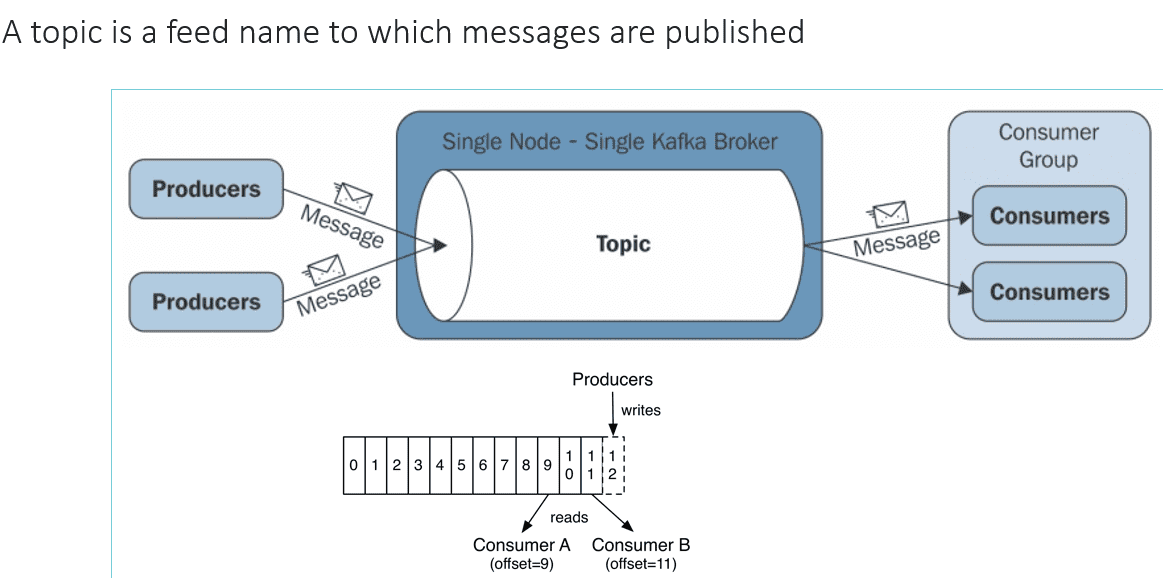
Patitions
- A topic consists 1 or more
partitions - Each partition is
ordered,immutablesequence of messages that is continually appended to a commit log
Kafka nouns
- topic, producer, consumer, broker, cluster,
- zookeeper, storm library, pub/sub
- Kafka is comparable to (相当于) traditional messaging systems such as
ActiveMQ - topics, patitions, Replicas, replication, in-sync replicas
- leader, follower
- load balance
- consumer group
- fault tolerance
- log compaction, log cleaner
- delivery semantics
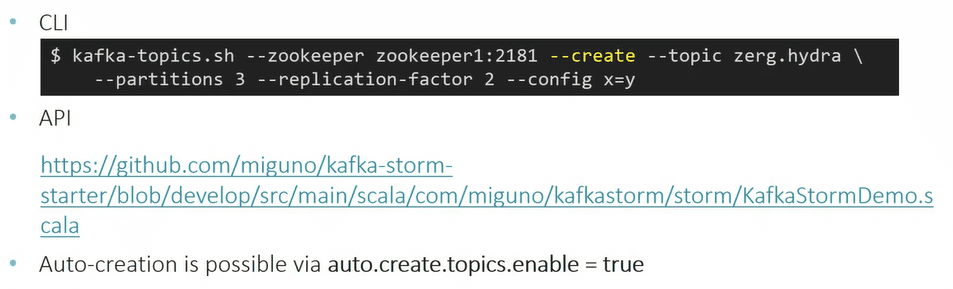
There are 3 ways topic can be created
Data serialization formats
- Kafka does not care about data format for a message payload
- it is up to developer to handle serialization/deserialization.
- common choices in practice: Avro, JSON
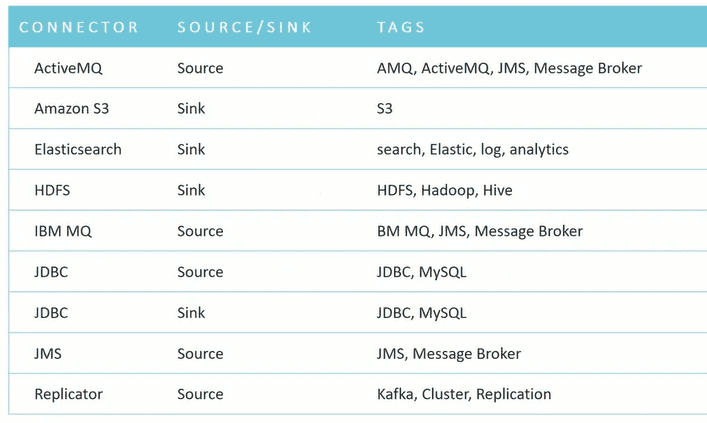
Kafka connect
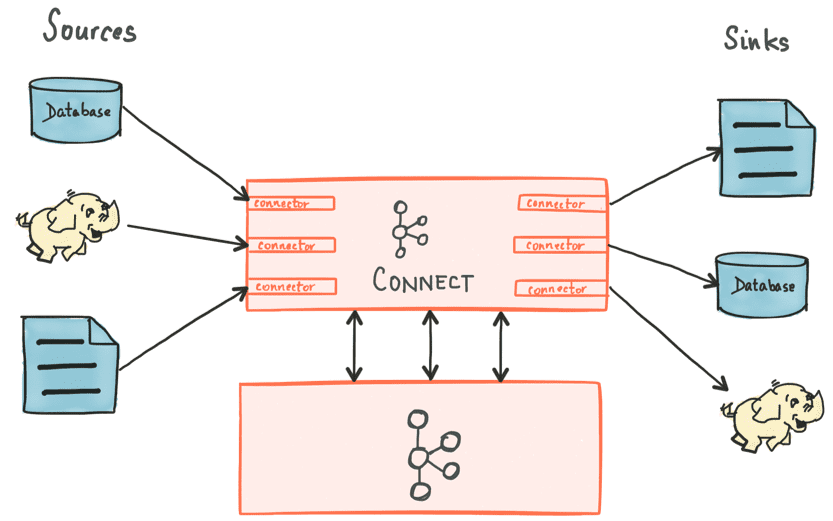
Connectors– the high level abstraction that coordinates data streaming by managing tasksTasks– the implementation of how data is copied to or from KafkaWorkers– the running processes that execute connectors and tasks: standlone and distributed.Converters– the code used to translate data between Connect and the system sending or receiving dataTransforms– simple logic to alter each message produced by or sent to a connector
Standard confluent connectors
System Tools
- Kafka Manager
- Consumer Offset Checker
- Dump Log Segment
- Export Zookeeper Offsets
- Get Offset Shell
- Import Zookeeper Offsets
- JMX Tool
- Kafka Migration Tool
- Mirror Maker
- Replay Log Producer
- Simple Consumer Shell
- State Change Log Merger
- Update Offsets In Zookeeper
- Verify Consumer Rebalance
Monitoring & Configuration
Use of standard monitoring tools is recommended
-
Graphite
- Puppet module: https://github.com/miguno/puppet-graphite
- Java API, also used by Kafka: http://metrics.codahale.com/
-
JMX
Collect logging files into a central place
- Logstash/Kibana and friends
- Helps with troubleshooting, debugging, etc. – notably if you can correlate logging data with numeric metrics
Q/A
- ISR: Intra-cluster Replication
Ecosystem
- https://cwiki.apache.org/confluence/display/KAFKA/Ecosystem
-
zookeeper
$ kafka-topics.sh --zookeeper zookeeper1:2181 --create --topic zerg.hydra \ --partitions 3 --replication-factor 2 --config x=y - istio